Seaweed, Sea Fog and the Mysteries of the Galician Coast
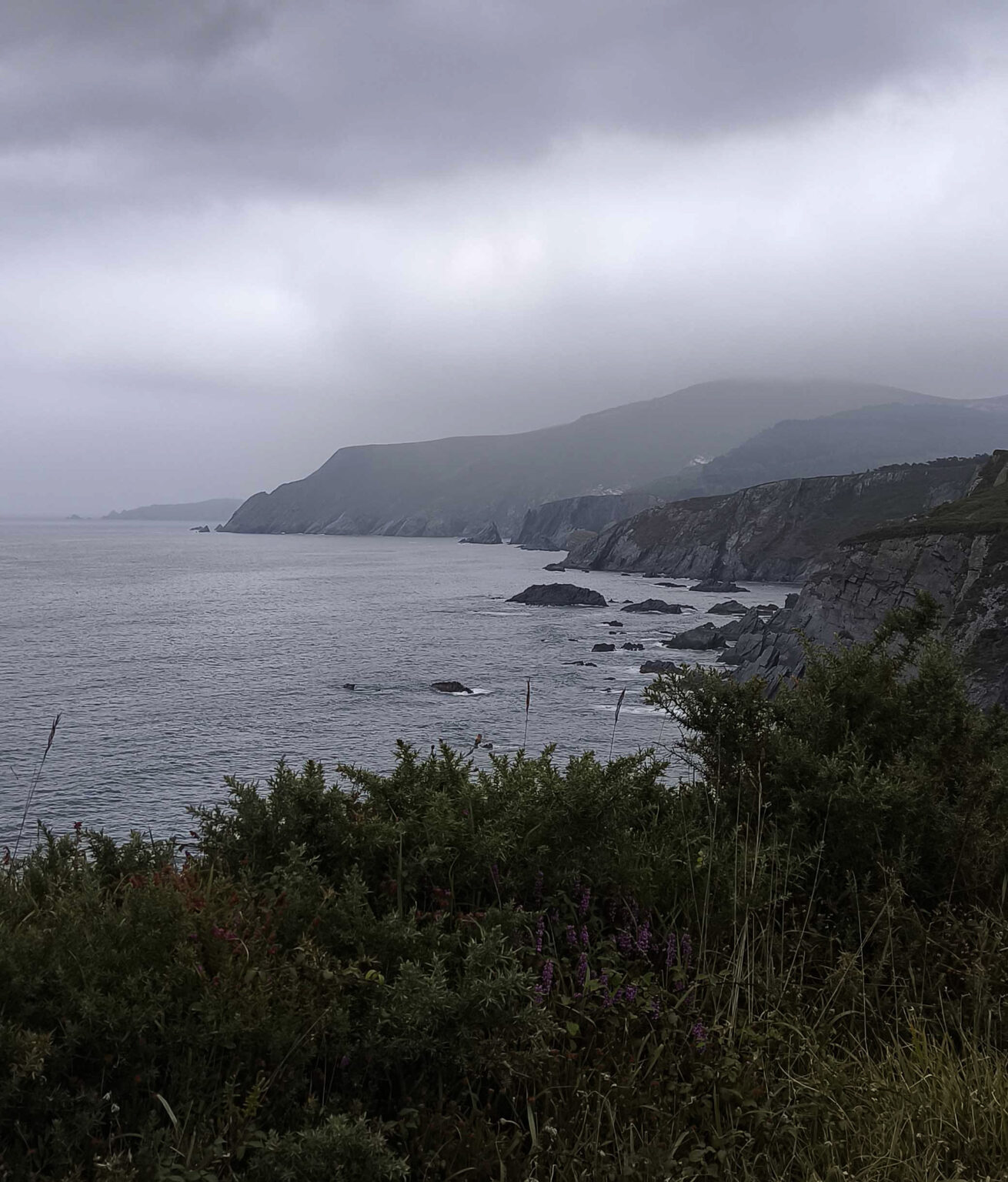
This summer, much of what has been inspiring me has come from the sea.
In the coast of Ortegal, in Galicia, the landscape can change dramatically from one morning to the next. Coastal fog often rolls in early in the day, softening the cliffs and hiding the horizon. Familiar places become strange and dreamlike, and the sea seems to turn into something much larger than the landscape we usually see.
This summer, the fog, the rocks, the caves and the seaweed have slowly found their way into my imagination and into my work.
A cave by the sea
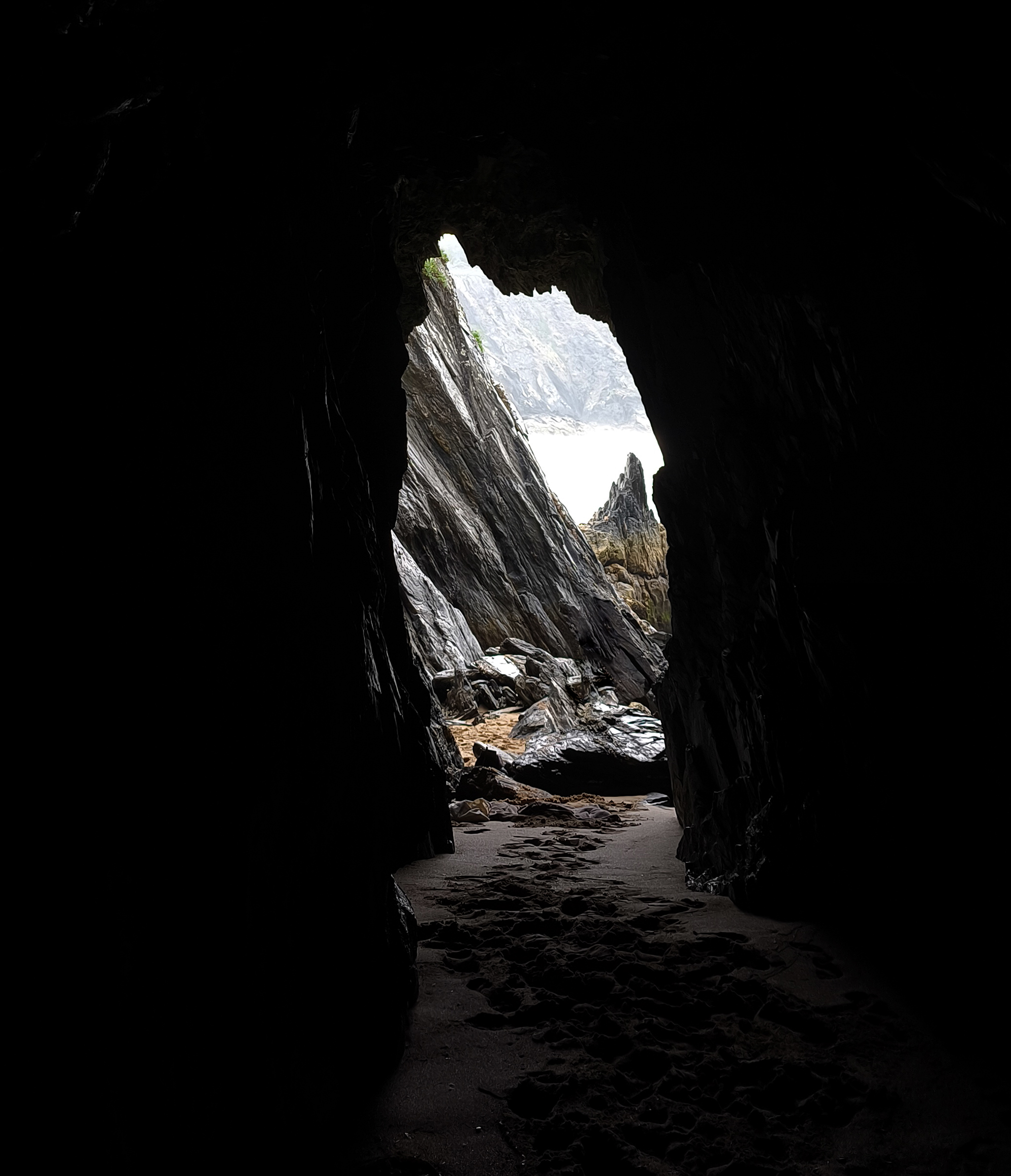
Caves have always held a particular place in human imagination. Across different cultures and mythologies, they are often seen as liminal spaces: entrances to the underworld, wombs of the earth, places of initiation and transformation, and spaces associated with chthonic gods and the mysteries hidden beneath the visible world. There is something about entering a cave and passing through darkness towards another opening that naturally lends itself to this idea of crossing from one state into another.
One day, while swimming near some rocks, I found a particularly imposing cave. From the entrance, I could see a small circle of light on the other side, so I realised that it was a passage rather than a dead end. I decided to swim through it. Inside, I found a dark pool where seaweed had become trapped after the high tide. It felt almost like a rite of passage: you have to enter the cave and face the fear of what might be inside before you can come out on the other side, somewhere completely different.
This idea of the cave as a place of initiation brought me back to the ancient Greek Orphic tradition. For the Orphics, the journey into the underworld was something that needed to be rehearsed during life. Through funerary rites, the initiate symbolically experienced death and the journey into the underworld, preparing themselves for the moment when the real journey would eventually come.
As part of these rites, the Orphics wrote down the words they would need to recite when emerging from the darkness, so that the guardians of the underworld would recognise the soul and allow it to pass towards its eternal rest. One of the formulas reads, “I am a child of Earth and starry Heaven.” To make sure these words would not be forgotten, they were inscribed onto small gold tablets and placed with the dead, sometimes inside the mouth. These tiny tablets, found in archaeological sites across the Mediterranean, are now often described as a kind of passport for the dead.
I will come back to this subject in a future post, as it is already becoming part of another collection I am slowly developing.
But, returning to the sea…
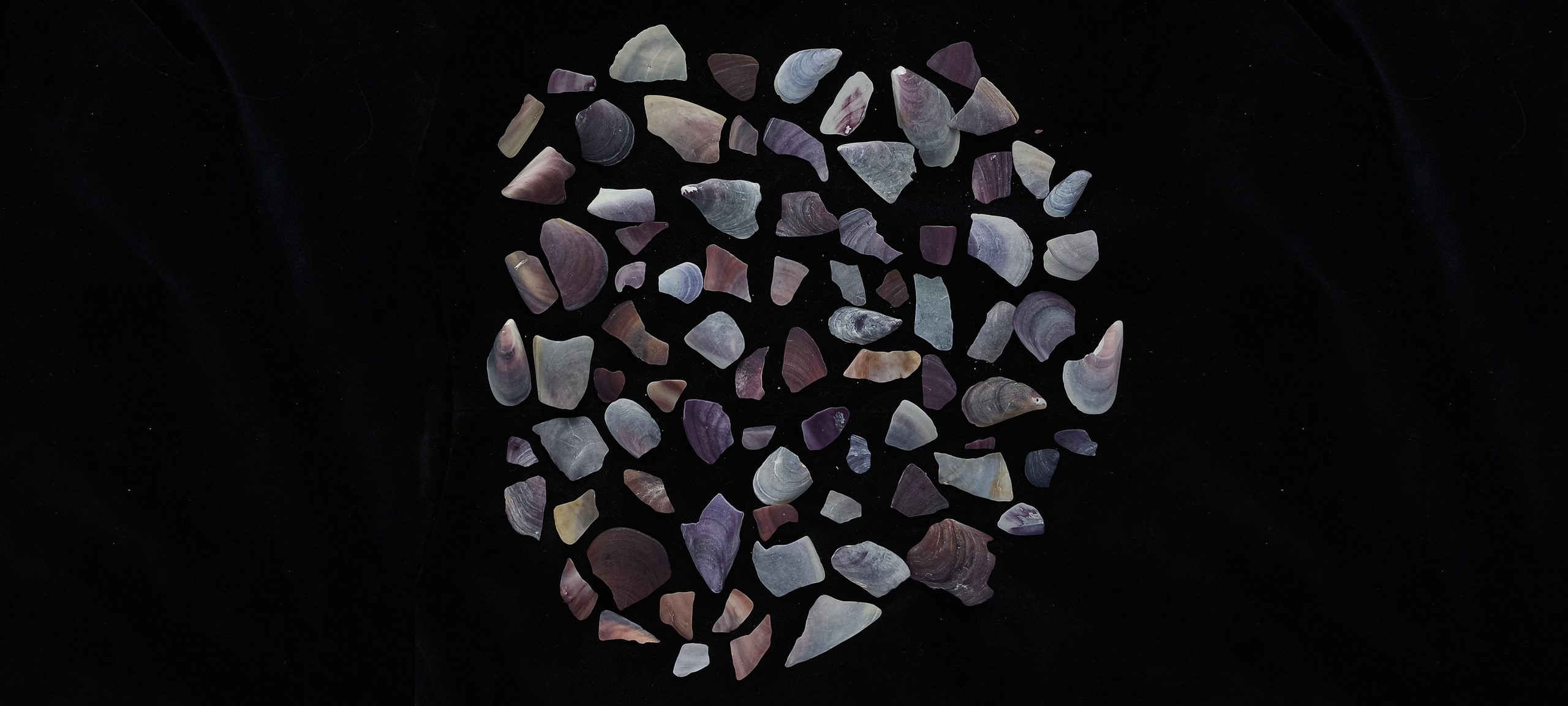
The vaulted ceiling of the cave is alive, covered with thousands of tiny molluscs. They make a sound that I still don’t quite know how to describe, other than by using the word glitter. It is a strange, delicate sound, as if the whole ceiling were whispers of sparkling glitter above you. When you finally swim through the cave, you find yourself at the foot of the cliffs, surrounded by a labyrinth of enormous fallen rocks. When the tide is coming in, many small beaches and pools form between them, making the landscape even more extraordinary. But you have to keep an eye on the tide and make sure you leave in time to swim back through the cave.
Bringing the sea into my studio
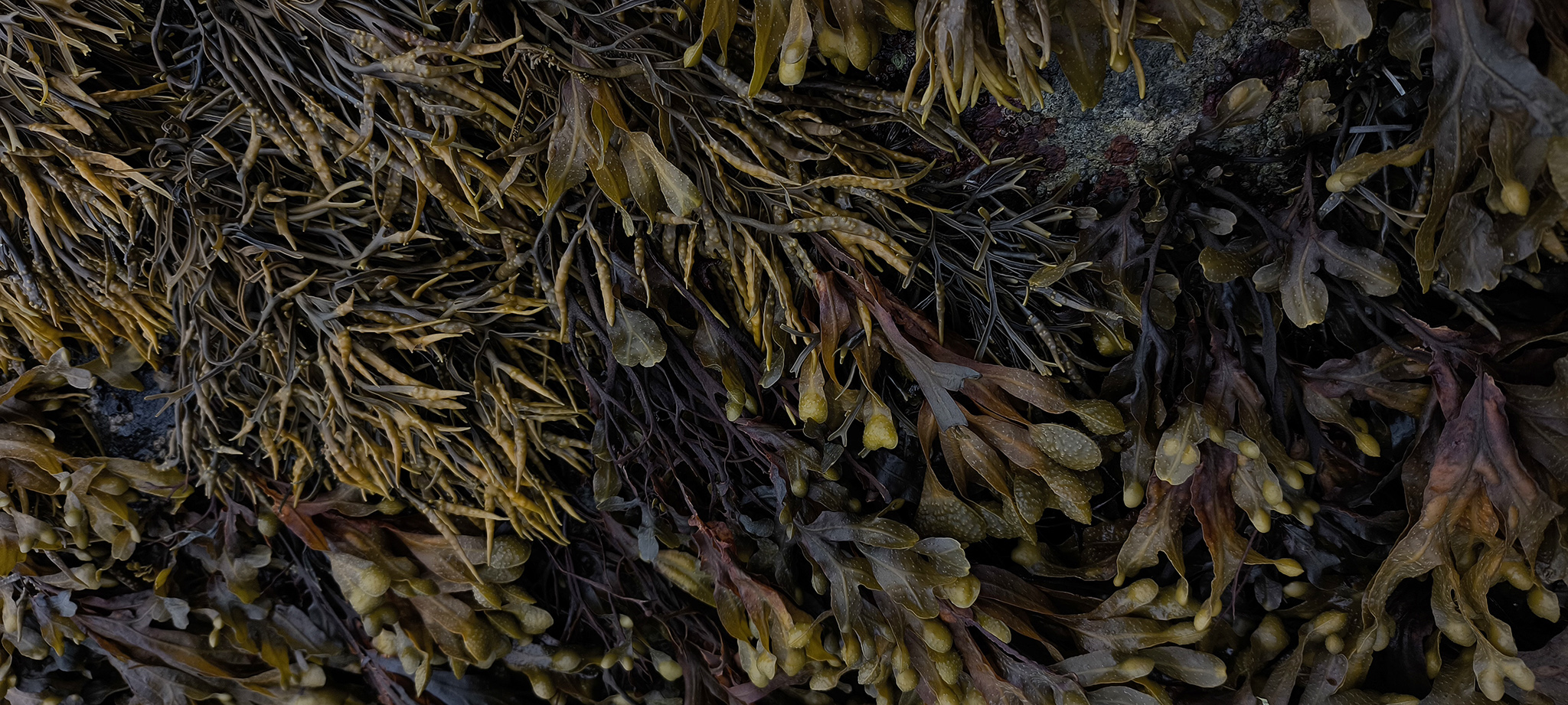
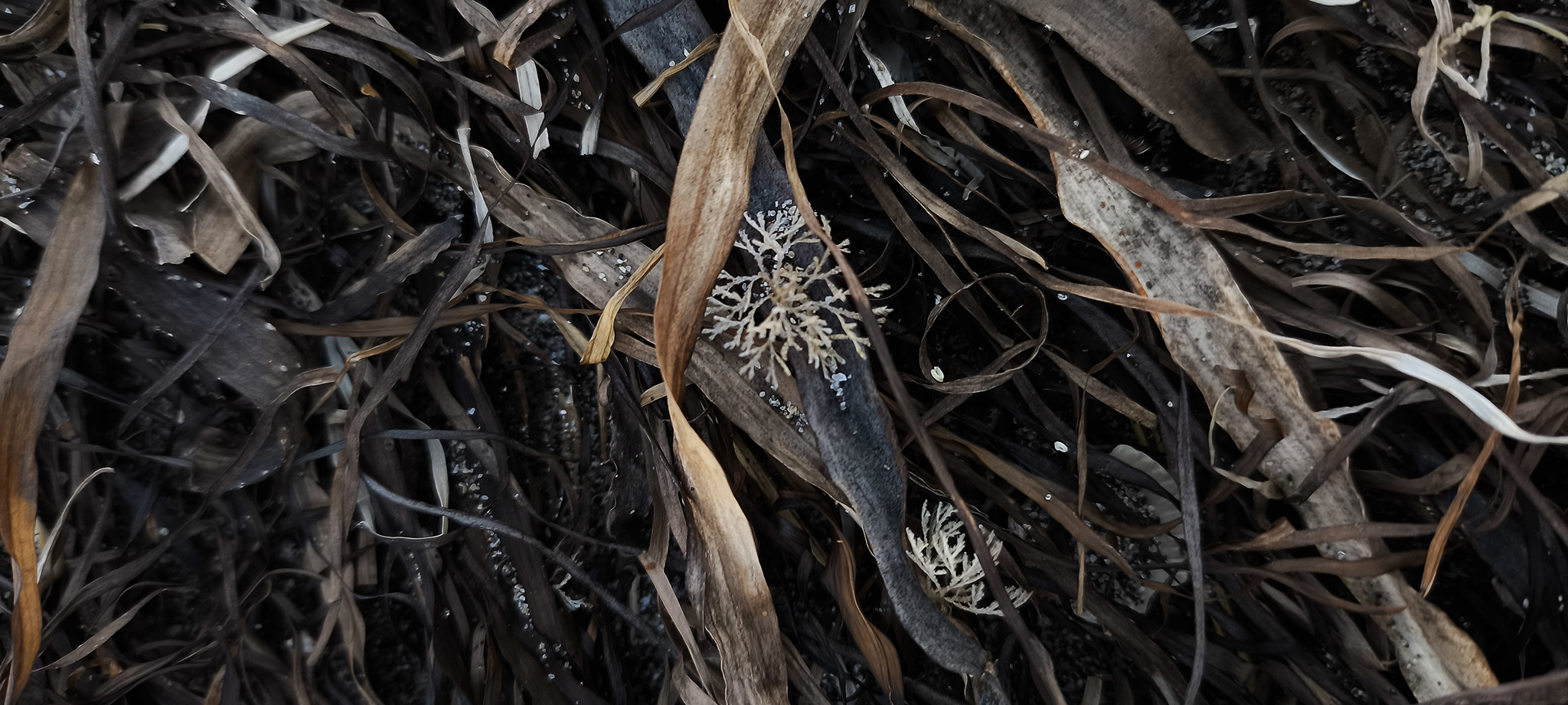
I found this place so beautiful, and it inspired me so much, that I decided to take some seaweed home and experiment with it. I wanted to see whether I could incorporate it into my artwork. I only wanted to collect seaweed that had already fallen away naturally rather than pulling it from the rocks, but it also needed to have been washed ashore recently enough that it had not started to decompose and develop a strong smell.
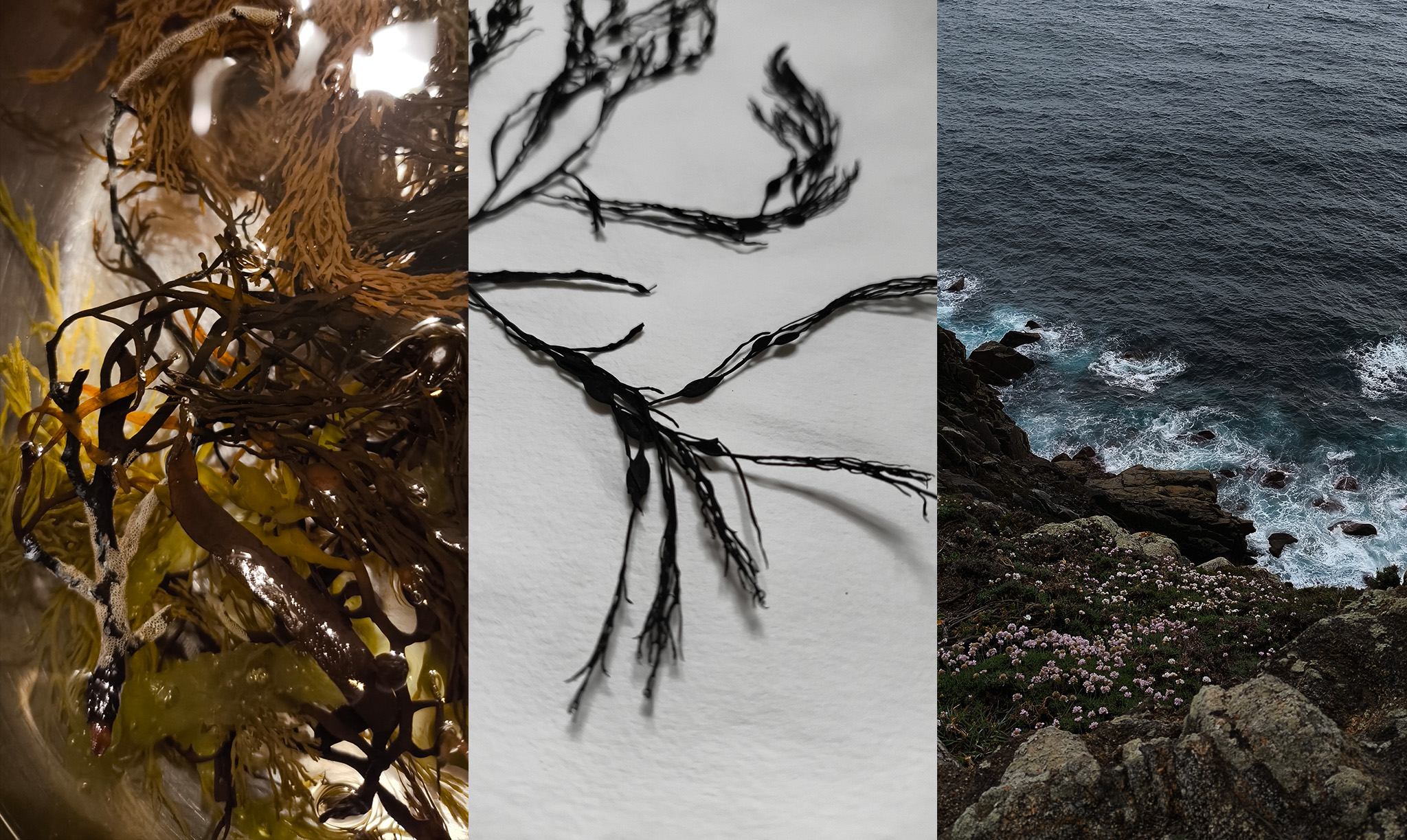
Since then, I have returned to collect seaweed several times, gradually finding out which varieties work best for what I want to do. Some are too thin, some too thick, and some simply fall apart when I try to prepare them, as they dont resist the boiling water. I am learning which ones keep their shape, which ones have the most interesting textures, and which ones retain their colour after drying.
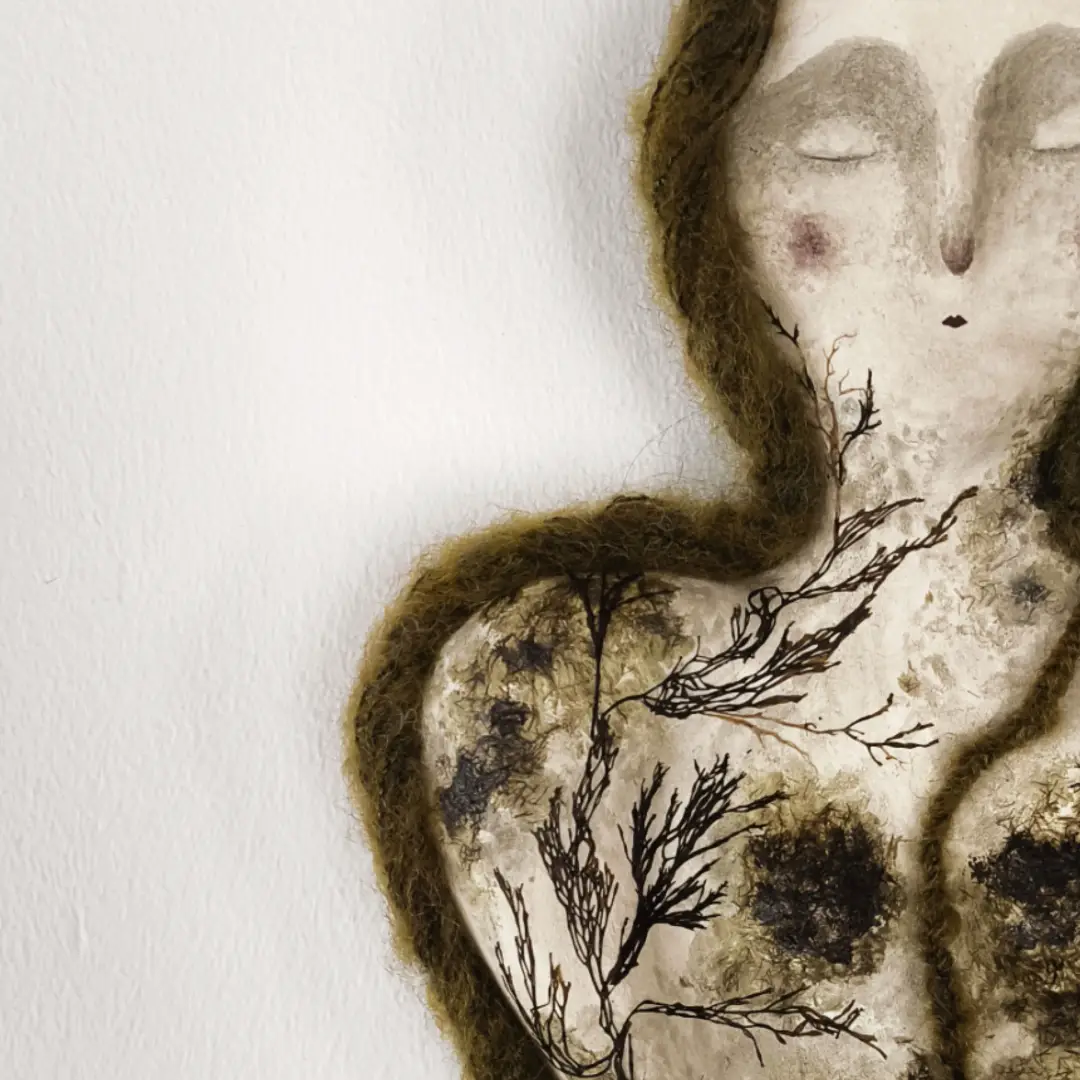
The most complicated part of the process is actually arranging the seaweed before pressing and drying it. It can take me hours to position all the different pieces in a way that feels natural and balanced. Seaweed has its own shapes and movements, and it is not always easy to make it move as you want it to. At the same time, this is one of the things I find most interesting about working with it. I am not starting with a completely blank material and deciding what shape it should have; I am responding to something that has already been shaped by the sea.
There is something very magical about bringing these pieces of seaweed into the studio. Until recently, they had been living among the rocks beneath the surface, moving with the currents and resisting the force of the waves. They had their own place within that underwater world until, eventually, they became detached and were carried towards the shore.
The strange beauty of pressed seaweed
The practice of collecting and pressing seaweed also has its own history. Seaweed pressing became particularly popular during the Victorian era, when collecting specimens from the natural world was a common pastime. People would carefully arrange and preserve seaweed in albums, sometimes creating surprisingly beautiful compositions from the shapes and colours they found along the shore. I find this history interesting, although what attracts me to the process is perhaps less the idea of preserving a specimen and more the possibility of using these natural forms as a starting point for stories and images.
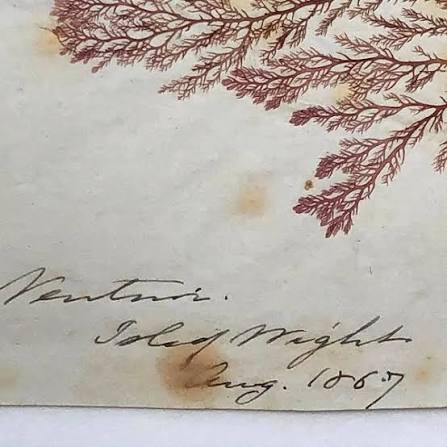
These are the kinds of things that fill my imagination with stories: what might have happened before they reached the shore, what might be happening beneath the surface without us noticing, and what lives and movements are taking place in places we rarely see. The sea is full of these hidden worlds. We see its surface, but underneath it there are constant cycles of movement, growth, decay and transformation that continue whether we are there to witness them or not.
The seaweed, together with the textures, cyclical movements, forms and intense colours of the coast, even when they have become faded and weathered, are now very much part of the collection I am working on.
There is something beautiful about taking these small remnants of the sea and incorporating them into something imagined. I am still experimenting with them, collecting different varieties, pressing them, drying them and trying to understand what they can become. I don’t quite know where all these experiments will lead yet, but I know that the sea and this particular stretch of the Galician coast have already become an important part of the work I am making. I hope to be able to share the collection very soon.
ℳ.